Start with the workplace, then choose the equipment
A vending program should solve a specific daily problem. Perhaps employees have a short lunch break, the nearest refreshment option requires leaving a secure building, or the office coffee area no longer suits the people using it. Equipment is only one part of the answer. The useful starting point is an account of who comes to the workplace, when they take breaks, what they want to buy, and how the building can support reliable service.
This guide is for business owners, office managers, property teams, and facility managers planning a Trenton or nearby Mercer County workplace. It provides a sequence of decisions to make before requesting equipment. The examples are planning scenarios, rather than claims about named customers. A smaller office and a busy distribution workplace can both benefit from refreshments, but they need different product quantities, access arrangements, and budgets.
What makes a Trenton plan local?
Confirm the exact municipality and building address before discussing coverage. A workplace described as “Trenton area” could be in Trenton, Hamilton Township, Ewing, or another nearby community. That distinction matters for delivery planning and for identifying the authority to ask about a proposed food operation. The quote request should name the actual location rather than relying on a regional label or postal address alone.
The City of Trenton’s Division of Economic Development describes business retention, expansion, and coordination with city services among its responsibilities. That is a useful starting resource for a business investigating its broader site needs. Its listing does not indicate any endorsement of this vending service. For refreshment planning, use your own building information: loading access, occupied floors, security procedures, and the area available to employees.
Count the people who will actually use the break room
Total payroll headcount can be misleading. A business with employees spread across remote work, travel, and several shifts may have far fewer people present at a given time. Make a simple weekday attendance record before estimating demand. Ask supervisors how many employees are typically on site, which days are busiest, whether contractors use the same break area, and how attendance changes during holidays or seasonal work.
Separate employee traffic from visitor traffic. A staff-only room should be planned around repeat users and their preferences. A public lobby needs a different discussion about access, supervision, payment instructions, and responsibility for the area. Neither model automatically qualifies for equipment placement. The operator needs enough information to assess likely purchasing activity, product waste, and the practicality of serving the site.
For a hypothetical two-shift workplace, write down the overlap between shifts as well as their individual headcounts. If most purchases happen during one short break, capacity and queue management may matter more than an impressive machine display. If usage is spread throughout the day, a smaller installation may be easier to keep tidy and stocked. Treat these as questions to investigate, rather than fixed rules based on an employee threshold.
Compare the formats before making a commitment
Snack and drink vending
Traditional vending keeps products behind a controlled dispensing mechanism. It can be a practical starting point where space is limited or the building prefers a contained refreshment area. Discuss the balance of drinks and snacks, the payment options on the proposed machine, and how a user reports an unsuccessful purchase. Machine dimensions, door swing, cooling needs, and access for servicing should be confirmed for the actual equipment.
Micro markets
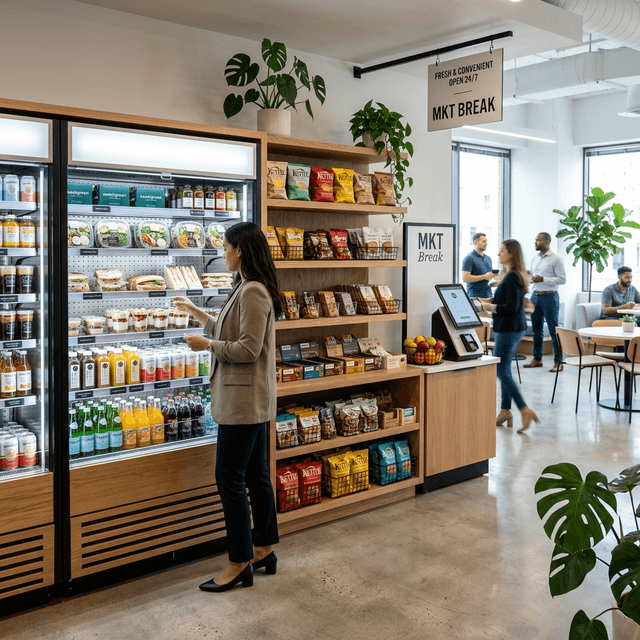
A micro market typically combines shelves, coolers, and self-checkout. The open format allows a different product range but also creates responsibilities around checkout, cleaning, waste, and access control. Ask who manages stock differences and how chilled products are handled. A market should suit the available audience and the building’s operating arrangements; the amount of spare wall space alone does not establish that it will work.
Coffee, water, and pantry options
Coffee service, water options, and pantry service can address needs that snack machines do not. Discuss consumables, filtration, cleaning, replenishment, and billing separately. An employer-funded pantry makes refreshments available without individual checkout, but the employer still pays for the program. If the team mainly wants reliable coffee and drinking water, start that conversation before assuming a larger market is necessary.
Understand what no-cost placement means
No-cost placement is an equipment arrangement for a qualifying location. Eligibility depends on the operator’s assessment of the site, potential usage, access, and service requirements. It is not an automatic entitlement for every business or every service format. Ask for the proposed arrangement in writing, including the equipment being offered, ownership, installation responsibilities, and any conditions that could change the arrangement.
Product purchases remain separate from equipment placement. Employees normally pay for products they choose from a vending machine or market unless the employer agrees to fund or subsidize them. Coffee, water, pantry stocking, electrical work, or other optional services may have their own costs. A proposal should distinguish these items clearly so the business can compare like-for-like options without treating “free placement” as “all refreshments are free.”
Discuss contract length, removal terms, damage responsibility, product pricing, service expectations, and any commission arrangement directly. Do not assume a commission, a guaranteed response time, or an absence of contractual obligations. If the business is comparing several proposals, use the same attendance and building information for each. A useful comparison explains both the cost allocation and the operating responsibilities, not simply the number of machines supplied.
Walk the delivery route before selecting a location
The proposed break room may look spacious while the route to it is difficult. Measure entrance doors, corridor turns, elevator doors, and the final installation area. Identify steps, ramps, uneven surfaces, and any restrictions on loading at the building. Send measurements or nonsensitive photos when requested, while avoiding security credentials, employee information, or confidential material visible in the background.
Ask the building manager whether deliveries require an appointment, insurance documentation, an escort, or a reserved loading area. Identify who can grant access if the usual contact is away. In a leased office, determine whether the landlord must approve equipment, electrical changes, or use of a shared amenity area. For an upper-floor workplace, confirm elevator capacity and scheduling before choosing equipment rather than after it arrives.
Leave room for people as well as equipment. Users need to approach, select products, pay, and leave without blocking circulation. Restocking staff need access to open the equipment and move supplies safely. Preserve required exit paths and consult the building’s responsible professionals about accessibility and electrical suitability. A convenient spot beside a doorway can become a poor installation if it obstructs movement during a busy break.
Separate employee access from operator access
Employees may have round-the-clock access to a room while the operator can enter only during business hours. Record both sets of hours. A site supporting evening or overnight work needs a clear plan for restocking around its real consumption pattern, and an agreed way to report problems outside the operator’s normal visit window. Confirm what support is available rather than inferring it from the building’s schedule.
Secure facilities should establish an approved delivery process. Use the building’s existing credential procedures, and keep access codes out of public forms. Identify a primary contact and a backup who can coordinate visits without involving unrelated employees. If the room will be locked for renovations or temporarily closed, provide advance notice so deliveries can be adjusted and perishable products are not left in an inaccessible area.
Build a starting product list with your team
Ask employees a few concrete questions: what they currently bring, what they would buy on site, which drink sizes suit them, and whether they want breakfast or afternoon options. Keep the survey short enough that people will answer. Include those working outside the main office schedule. An initial product plan should reflect expressed interest and observed use rather than a manager’s personal snack preferences.
Balance familiar choices with alternatives. Water, unsweetened drinks, portioned snacks, and more filling options can sit alongside conventional favorites. Specific brands and dietary options depend on supply and the proposed equipment. Do not promise every requested item or describe a product as suitable for an allergy based only on a category name. People with dietary restrictions need access to the actual manufacturer’s ingredient and allergen information.
Start with a manageable selection and review it. Too many similar products can tie up shelf space while slower items expire. Record requests that cannot be supplied immediately, and distinguish occasional interest from repeated demand. When introducing fresh food, ask how availability will be matched to attendance and how unsold items are handled. A sensible product plan is one the operator can replenish and the team will use.
Discuss food handling with the right authority
The New Jersey Department of Health’s retail food page identifies N.J.A.C. 8:24 as covering retail food establishments and food and beverage machines. Use that official resource to locate current guidance and the appropriate authority for your specific site. State-property food facilities may involve a different contact than ordinary local businesses. Ask before installation which approvals apply and which party is responsible for them.
For planning purposes, assign cleaning, spill response, stock rotation, and communication responsibilities in writing. Ask the operator how it handles refrigeration problems and product removal. Employees should have a clear way to report a concern. A workplace refreshment guide cannot determine the permit requirements of an individual operation, so verify the actual proposal with the responsible health authority rather than relying on a general internet checklist.
Make payment instructions easy to understand
Confirm accepted payment methods for the proposed equipment. Card readers, cash acceptance, mobile wallets, and any market account system vary by installation. Ask how payment connectivity is provided and what happens if a connection fails. If your workplace restricts wireless devices or network access, resolve those requirements with its IT team before promising employees a particular checkout experience.
Provide concise instructions at the point of purchase. Users should know whether payment occurs before dispensing, how to scan each item in an open market, and where to report a charge or dispensing issue. Agree on the refund process and the information needed to investigate a problem. Never ask employees to share a full payment-card number with an office manager or submit it through a general quote form.
Agree on restocking and housekeeping
A replenishment plan should account for usage, not just a calendar interval. Ask how the starting schedule is set, what signals trigger a review, and how employees can report an empty selection. Attendance changes, shift changes, and temporary events can all alter demand. Tell the operator about these changes early so the product mix and quantities can be considered before the next visit.
Define the boundary between equipment maintenance and everyday room care. The workplace may manage bins, spills, tables, and common surfaces while the operator manages the machine or market equipment. Confirm the actual split in the proposal. Keeping this clear avoids a situation where everyone assumes someone else will clean an area. Include a process for reporting leaks, unusual noises, damaged shelves, or other concerns without attempting an unauthorized repair.
Launch with a simple communication plan
Before installation day, confirm the date, delivery contact, access window, and planned equipment location. Make sure the room is available and any required building work is complete. Inform employees when the service will begin and explain what is being offered. If the employer is funding a pantry or subsidizing purchases, state those rules clearly so employees understand which items are covered.
After installation, check the experience from a user’s perspective. Can someone find the payment instructions, read prices, and reach the products they need? Does the area remain comfortable during a busy break? Share the operator’s approved support channel and explain how to report a problem. A short workplace announcement is more useful than a long promotional message that omits the practical details people need on their first purchase.
Review the first month before expanding
Plan a review with the operator after enough ordinary working days have passed to see a pattern. Compare employee feedback with stock movement, product waste, and recurring support concerns. Keep the review focused: unavailable drinks, slow-moving snacks, confusing checkout, or inconvenient restocking access each suggests a different change. Expanding the installation should follow evidence of need rather than enthusiasm on launch day.
Document any agreed changes and a date to review them. If attendance has changed substantially, revisit the original placement assumptions and cost arrangements. A successful program can evolve from one machine to a broader refreshment setup, but expansion should still fit the audience and building. Seasonal disruptions or temporary low attendance are reasons for a conversation, not evidence that a single standard solution applies to every site.
Plan for building changes before they happen
Refreshment equipment should be included in discussions about a lease renewal, office move, renovation, or a change in building security. Tell the operator when a planned change could affect access, power, floor space, or attendance. Avoid moving a machine independently; ask who is responsible for disconnecting, relocating, and recommissioning the proposed equipment. A move that seems small can change the delivery route or require a new site assessment.
Keep the approved proposal, equipment details, and service contacts where the next office manager can find them. Record who owns the equipment, who pays for consumables, and which workplace contact handles questions. This helps a new manager distinguish routine product requests from changes that require approval. When an arrangement ends, agree on a collection window, building access, and any outstanding responsibilities rather than leaving the equipment in an unused room.
Prepare a quote request that answers the practical questions
Give the operator enough information to make a useful initial recommendation. Include the actual municipality, approximate daily attendance, shift pattern, preferred services, and whether the area is employee-only or public. Mention stairs, upper-floor delivery, restricted access, and any planned installation deadline. The initial request does not need confidential building plans or personal employee information.
- Who uses the room, and when are they usually present?
- Which refreshments are employees asking for?
- What floor space and delivery route are available?
- Who approves installation and coordinates operator access?
- Will individuals buy products, or will the employer fund some items?
- Which costs and operating responsibilities need clarification?
Use the service-area directory to explore nearby location pages and the service overview to compare formats. Then request a Trenton workplace quote. Ask for a proposal that separates equipment placement eligibility, product costs, optional service costs, and responsibilities. That creates a practical basis for a decision and gives the operator a clear picture of what your workplace needs.
Official resources checked for this guide on October 5, 2026: the City of Trenton’s economic development page and the New Jersey Department of Health’s retail food guidance linked above. The remaining recommendations are general planning guidance and illustrative workplace questions, rather than local statistics or claims about existing customers.